Spinney Mountain Reservoir Flies — The Chironomid Patterns That Produce Trophy Trout
For years, the South Park trophy stillwater conversation started with Antero. With Antero drained for 2026, Spinney Mountain Reservoir is the de facto trophy water of South Park — and frankly, the lake serious stillwater anglers should have been spending more time on anyway. This is a complete guide: when to go, where to stand, what to throw, and the depth, wind, and mindset tactics that actually move the needle.
May 30 update: Spinney is fishing from shore right now — chironomids at 53.5°F, callibaetis at 54-54.5°F, sight-fishable risers. See the current conditions post →
Why Spinney Produces Trophy Trout
Spinney sits at roughly 8,700 feet in the heart of South Park, fed by the South Platte River. The water is cold, clear, and high-oxygen — exactly the environment that grows big trout. The food base is exceptional: chironomids dominate, but damsels, scuds, and a healthy forage-fish population (suckers and minnows) round out the menu and put real size on the bigger fish.
The fishery is managed under special regulations as a trophy water — artificial flies and lures only, with limited harvest. CPW does its job here: the average Spinney rainbow or cutbow runs 18–22 inches, and 26-inch fish are caught every season. The true giants — the ones living in the deeper water and the structure — push the upper bounds of what a stillwater fly rod is built to handle.
When to Fish Spinney
Spinney fishes throughout the open-water season, but here's how I'd plan the year:
- March–April (ice-off): As soon as the ice retreats, trout push shallow and feed aggressively on chironomids in 6–12 feet. The most exciting fishing of the year for most anglers — pre-spawn rainbows are heavy, hungry, and willing.
- May–June: Reliable chironomid hatches. Fish hold a bit deeper, 10–18 feet. Wind starts to be a factor, but the fishing stays consistent.
- July–August: Dog days. Fish push deep, often 20+ feet during the heat. Dawn and dusk produce; mid-day is brutal. Damsel emergences in the mornings become a target.
- September–October (pre-winter feed): Cooling water triggers a hard pre-winter feeding push. The largest fish of the year tend to come during this window — chironomids still produce, but leech patterns get bigger eats.
- November to ice-on: Short, cold window where the lake stays open. Slow fishing, but the fish that hit are giants.
Where to Fish
Spinney has three high-percentage zones I rotate through:
- The western shoreline flats — Depth transitions from roughly 8 to 15 feet over chironomid-rich red bottom. The most productive water for indicator chironomid fishing year-round. Easy wading access from the western parking areas. Where most serious stillwater anglers start their day.
- The inlet area (South Platte inflow) — Where the river enters the reservoir. Current seam, concentrated bait, and constant forage flow. Produces consistently across seasons. Expect company on weekends.
- The wind-pushed bank — Whichever shoreline the wind is blowing INTO on a given day. Wind pushes food, food pulls bait, bait pulls trout. On a typical westerly afternoon, that's the eastern shore. On a rare east wind, flip the equation.
The red-bottomed sections around the reservoir are the chironomid factories — find red bottom, find feeding fish. Bring polarized glasses and pay attention.
What to Throw
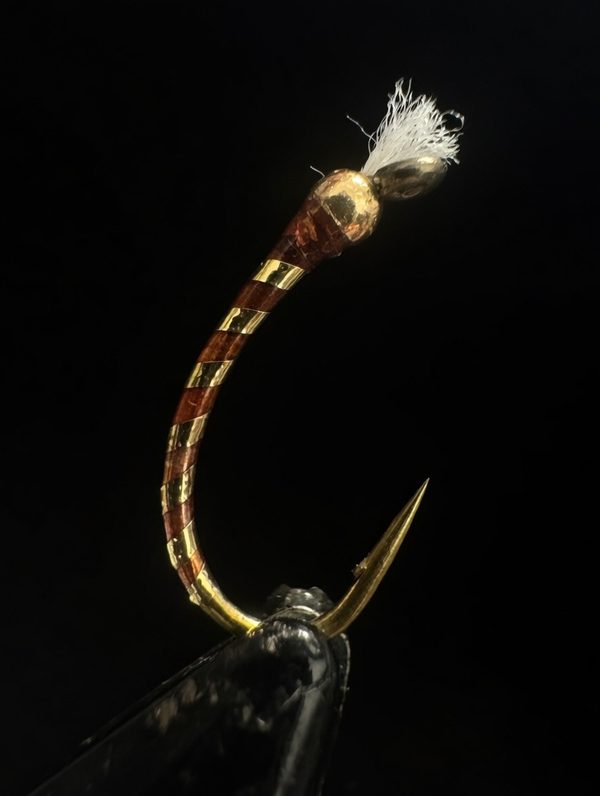
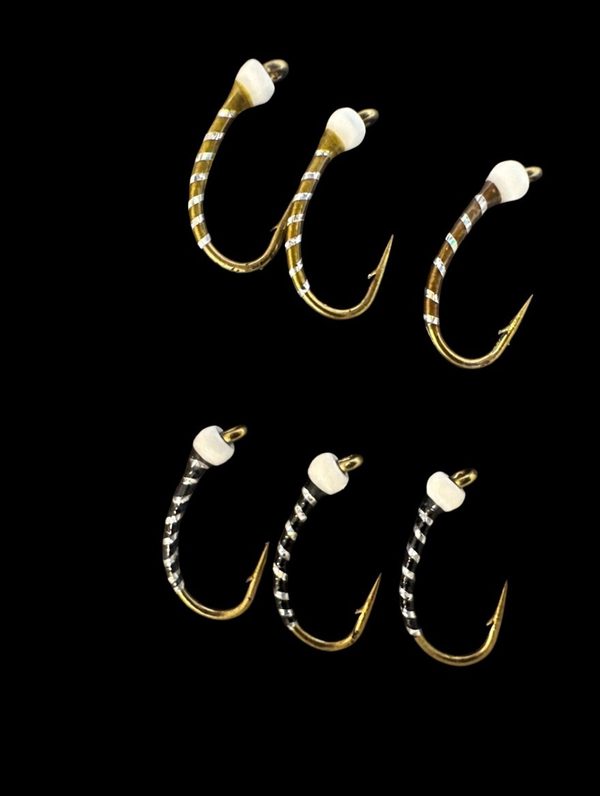
Chironomids are the dominant food source at Spinney year-round. Start with a Chocolate Gold or Snow Cone in #14 set 2 feet off the bottom. When fish are near the surface during heavy hatches, a Chirono'midge' in #16–18 hung just under a small indicator can be deadly. On stained-water days or during low-light periods, dark patterns like the Burnt Wino excel.
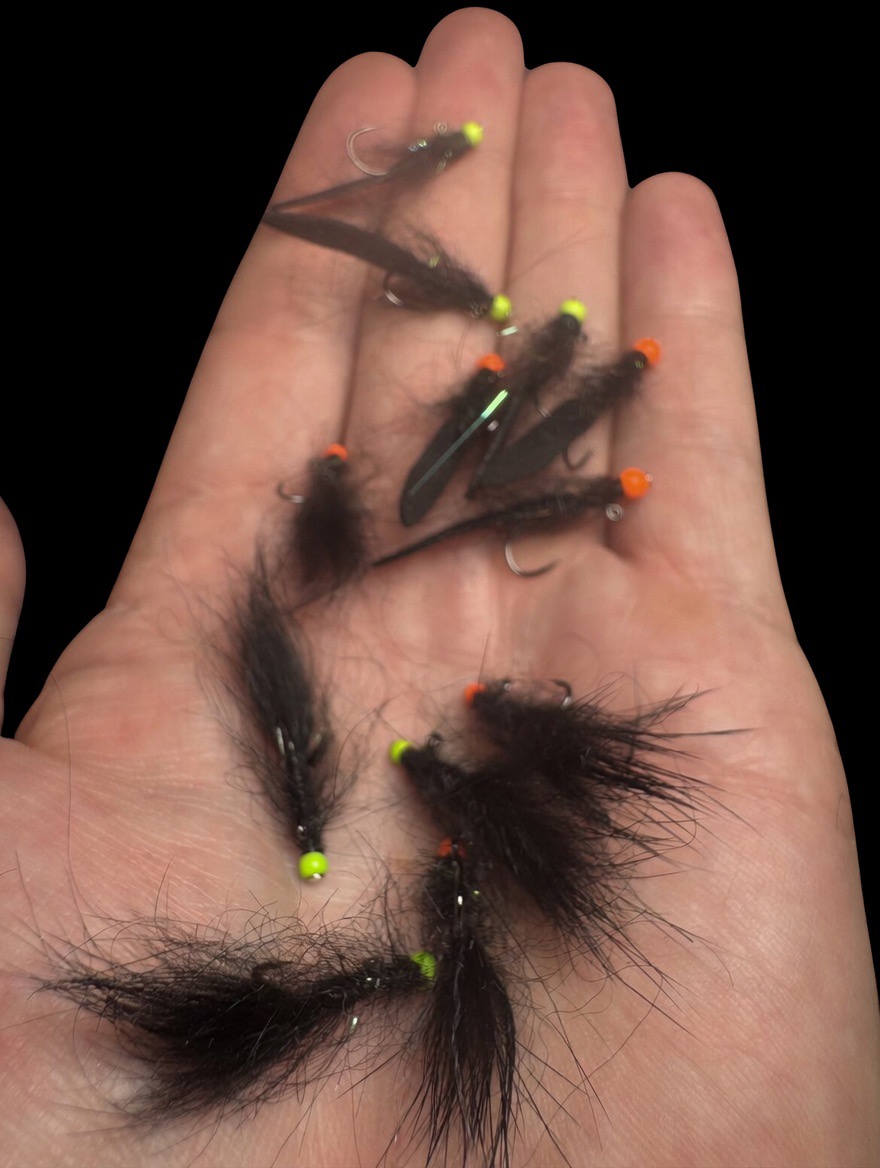
For the fall pre-winter window, add leech patterns to the rotation. A Balanced Leech hung two to four feet off the bottom under an indicator gets eaten by the heaviest fish of the year. The bigger Spinney trout are eating leeches and forage fish, not just bugs, and a leech profile in the column triggers the trophy class when chironomids stop producing.
Indicator Setup & Depth Control
The single biggest factor in catching fish at Spinney isn't pattern selection — it's depth. Wrong depth, right fly = nothing. Right depth, wrong fly = some fish. Right depth, right fly = consistent eats. Almost every angler I've seen struggle at Spinney was fishing two feet off the actual zone.
Standard rig: 9-foot leader to a small thill or pinch-on indicator, fluorocarbon from there to your fly. Set your dropper a foot off the bottom to start. If you're not getting eats in 15 minutes, change depth — not fly. Move a foot at a time, top of column toward the bottom. When you find the depth, mark it on your indicator with a sharpie or count your wraps. Spinney fish often stack at a specific zone, and sometimes a 2-foot window is the entire bite.
Full breakdown of the rig and methodology: our indicator-fishing setup post and our chironomid depth control deep-dive.
Wind Strategy
Spinney is famously windy. South Park lakes get hit by sustained 15–25 mph wind on a typical afternoon, and 30+ on bad days. Two angles to play it:
- Fish the windward bank. Wind pushes food, food pulls bait, bait pulls trout. The shore the wind is blowing INTO is the productive shore on a wind day. It's also the harder shore to cast from — but the fish are there. Earn the eats.
- When the wind is unfishable, go to morning. Spinney is often glass for the first two hours of light, then it builds. Plan your day around that window — set the alarm, get on the water before sunrise, fish the calm.
Common Mistakes at Spinney
- Standing on dead water. If you've fished one spot for 45 minutes with zero, the spot is dead. Move 100 yards. Spinney rewards rotation, not patience.
- Wrong leader depth. See the indicator section above. This is the single biggest miss almost every Spinney angler makes.
- Wrong rod. Trophy fish at Spinney want a 6 or 7 weight. A 5 weight will land smaller fish, but the giants in wind will break you off or run you into structure.
- Sleeping in. Pre-wind morning windows produce trophies. Showing up at 10 a.m. costs you the best two hours of the day.
- Quitting when the chironomid bite slows. Switch to a leech or damsel pattern instead of packing up. The fish are still there; the menu changed.
If Antero was your home water in 2025 — Antero is being drained for 2026 (full breakdown here) and the fishery is over for the foreseeable future. Spinney is the closest, most direct substitute: same forage profile, same chironomid program, same trophy potential. Eleven Mile and the Delaney/Lake John complex are the next two pivots most displaced Antero anglers are making this year.
Guide Spinney With Us
Trout Tricks guides Spinney Mountain Reservoir throughout the season. We know this water intimately — the depths, the hatches, the seasonal patterns, the wind quirks — and we'll put you on fish efficiently. Whether it's your first time at Spinney or you're trying to crack a tough bite, a guided day here is one of the best investments you can make as a stillwater angler.
Recommended reading: our South Park fly fishing guide, chironomid fishing on South Park reservoirs, and our trophy trout playbook.
Get the Patterns Used in This Article
Every fly mentioned in this guide is hand-tied fresh to order by Thomas Frank. Proven on Colorado's best stillwaters — tied on 2x heavy wire hooks with tungsten beads.
Comments