Antero Reservoir Is Being Drained — Colorado Just Lost One of Its Most Unique Trophy Fisheries
Status as of May 20, 2026: Antero's drawdown began around May 13. The fishery, for all practical purposes, is over. CPW says fish are being relocated. Public evidence of that is thin. This post will be updated as facts surface.
Antero Reservoir is being drained. The drawdown started in mid-May 2026, and by the time you're reading this the water is well below the boat ramp. I haven't driven up to confirm conditions myself, and nobody in my circle has either — so what I'm reporting here is the structural reality of the situation, not a shoreline report.
What's being lost isn't just another Colorado stillwater. Antero held a species mix I'd argue didn't exist anywhere else in the state.
The Species List Nobody Else Had
Most Colorado stillwaters hold one or two trophy species at most — usually rainbows, sometimes browns, occasionally a strong cutbow population if you're somewhere in the South Park watershed. Antero held five trophy-class species in the same basin:
- Trophy brown trout — not stockers. Wild-grown, double-digit eats most seasons.
- Cutbows — the South Park staple, but Antero grew them bigger than most.
- Tiger trout — the brown × brook hybrid you've probably only seen photos of from Wyoming. CPW stocked them at Antero.
- Tiger musky — Esox hybrid, an apex ambush predator. Few Colorado waters hold them.
- Splake — brook × lake-trout hybrid. A near-secret of Antero. Rare enough in Colorado that Antero was the primary place most anglers had a real shot at one.
Five trophy species in one basin. Some of them — splake and tiger musky especially — you cannot replicate at Spinney, Eleven Mile, Delaney, Lake John, or anywhere else in South Park. Antero was the only address.
Why That Mix Existed
This is the part most non-anglers miss: Antero was never built to be a trophy fishery. It's a Denver Water storage reservoir. The fishery was always a secondary use of a working piece of infrastructure — recreational permission on top of an industrial asset.
Strangely, that's what made the species list possible. Because Antero wasn't a politically protected "real" fishery, CPW could use it as an experimental stocking site. Splake? Tiger musky? Tiger trout? Try it here, see what happens, no political fallout if it doesn't take. They tried it, and over years of stocking plus Antero's abundant chironomid, scud, and forage biomass, the experiment grew into trophies.
The irony: it took a water-storage reservoir — a lake never meant to be a "real" fishery — to produce one of the most unique trophy waters in the western U.S.
Why It's Draining
The structural answer is straightforward: drought, reservoir maintenance, and Denver Water's storage rights. Water sitting in Antero at 8,600 feet is more valuable to Denver's downstream pipes than water holding fish at altitude. When the call comes from down-system, the fishery loses every time.
This isn't a villain story. CPW didn't pick this; Denver Water did, and CPW manages within the constraints they're handed. The structural reality is that Antero exists to hold water for Denver, and the fishery that thrived there always did so at the pleasure of the storage operator. The fish were tenants, not owners.
Knowing that doesn't make it easier. We tend to assume the lakes we love will be there next season. Antero is the reminder that nothing on a Colorado fishery map is guaranteed when the underlying use is municipal storage. For more on the timeline, see our Antero closure breakdown.
What CPW Says About the Fish
CPW has publicly stated they're relocating the fish. To where, in what numbers, by what method — the details on the public side are scarce. The anglers I've talked to who've been up to look are reporting an active drain, not an active salvage operation. That doesn't mean salvage isn't happening; it means nobody outside CPW has photographed nets, electroshock boats, or transfer trucks, and the working community hasn't seen the receipts.
If you have eyes on the lake or have heard from somebody actually working a salvage, I'd genuinely like to know. (Email's at the bottom of every page on this site.)
For now, the working assumption among the South Park guide community is: some fish get saved, most don't. The trophy class — particularly splake and tiger musky — are unlikely to be the salvage priority, because the regional management plan doesn't have an obvious destination for them. They were unique to Antero on the way in, and they're unique to Antero on the way out.
The Patterns That Caught Them
Before the drain, here's what I threw at Antero. I'm leaving this list intact, not as "what's working right now" but as a record of what worked when the fish were home. These same patterns still produce on Spinney, Eleven Mile, and Delaney — the waters most likely to absorb any Antero fish that survive the move.
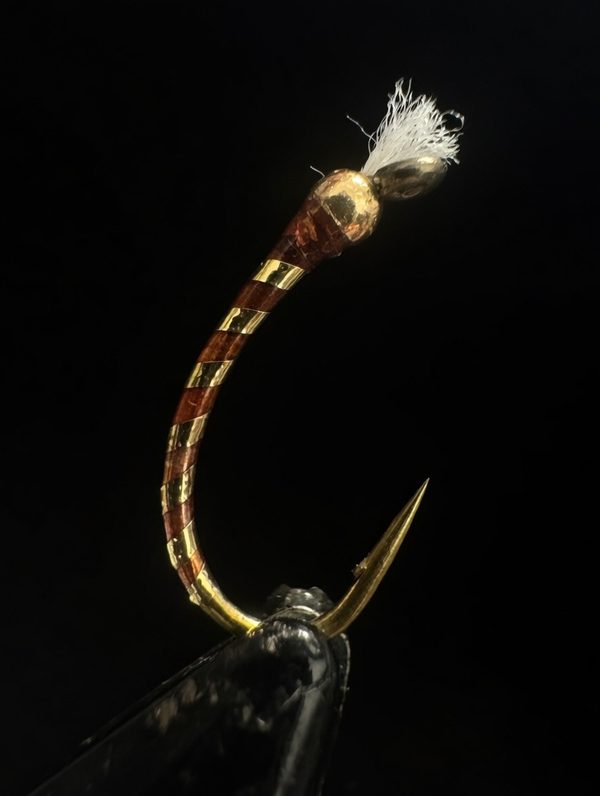
- Chocolate Gold — Tungsten bead in red/brown with gold ribbing. Deadly in 12–18ft. The most consistent pattern I had at Antero for browns and cutbows.
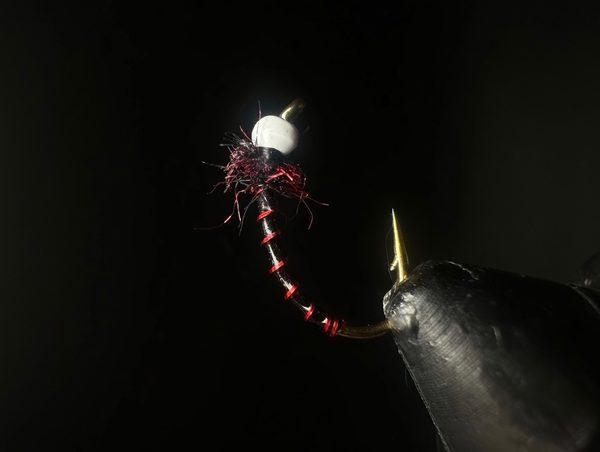
- Snow Cone (Frank's Red Hot Ronnie) — Black thread, red wire, white bead. The pattern Antero fish ate confidently when nothing else got committed.
- Muskie Buzzer — Olive/brown with a realistic wing case. The 10–14ft chironomid pattern. (Despite the name, no relation to the tiger musky — the fly was named for Musky John, the angler who discovered the pattern.)
- Chirono'midge' — When pressured Antero browns got fussy on bluebird days, dropping to a #18 was the difference between a slow morning and a banner one.
The bug profile that produced at Antero is the same bug profile producing today at Spinney and Eleven Mile. The patterns travel; the fishery doesn't.
Where to Fish Instead
If you're reading this trying to plan a 2026 Antero trip — stop. There isn't one. Read the Antero replacement playbook for the four waters that absorb most of what Antero offered. The short version:
- Spinney Mountain Reservoir — the closest match for the cutbow + brown fishery, same chironomid-dominant food base.
- Eleven Mile Reservoir — the only other South Park trophy water with stocked tigers. Bigger water, more variable, but it produces.
- Delaney Buttes & Lake John — a few hours north, the leech-heavy fishery Antero anglers historically underused.
None of these is a 1:1 replacement. The splake and tiger musky are gone with the water. But for chironomid-eating browns and cutbows, the South Park alternatives will absorb the displaced traffic.
What Comes Next
Antero may refill — eventually. That timeline is set by Denver Water's operational priorities, not CPW's stocking plan. If it does refill, growing the trophy class back will take years: splake to 18+ inches, tiger musky to 30+ inches, brown trout to the size class Antero was known for. We're not talking about a one-season recovery.
I'll update this post as facts surface — drain status, salvage results, refill timeline, future stocking plans. The Crew newsletter is the fastest way to hear about updates — link in the footer.
For now: Antero is being drained, the trophies are being lost, and nobody outside CPW knows exactly how much will return. That's the honest version on May 20, 2026.
Get the Patterns Used in This Article
Every fly mentioned in this guide is hand-tied fresh to order by Thomas Frank. Proven on Colorado's best stillwaters — tied on 2x heavy wire hooks with tungsten beads.
Comments