Eleven Mile Reservoir Flies — Chironomid Patterns & Tactics for 11 Mile Stillwater
If you've driven through South Park on Highway 24 and glanced at that sprawling reservoir shimmering in the high-altitude sun, you already know Eleven Mile Reservoir — locally written "11 Mile" — is big. At over 3,400 surface acres and sitting at 8,663 feet, 11 Mile is one of Colorado's largest and most productive fisheries — and as of 2026, with Antero drained and Spinney absorbing the displaced traffic, it's also the most underused South Park trophy water for anyone willing to put in the size-and-mobility work. Fished correctly, 11 Mile delivers some of the most consistent trophy trout action in the state, with rainbow trout, brown trout, and kokanee salmon all growing to impressive size. Here's everything you need to know to fish it right.
Why 11 Mile Reservoir Produces Trophy Trout
11 Mile's size works in your favor. A larger water body means a larger chironomid biomass, more feeding lanes, and more room for trout to grow without excessive competition. The reservoir is managed by Colorado Parks and Wildlife with a strong focus on quality fishing — the stocking program, combined with wild reproduction in the reservoir's tributary streams, produces a self-sustaining population of rainbows and browns in the 16–26" class. The nutrient-rich bottom, fed by the South Platte River and Eleven Mile Creek, creates one of the most prolific chironomid environments in the state.
Best Access Points at 11 Mile
11 Mile Reservoir sits within 11 Mile State Park (day use and camping fees apply). The reservoir has several distinct fishing zones, each with different characteristics:
- The Dam Area (South End) — Deep water (20–30ft) that holds fish year-round, especially in warm months when trout go deep to find cooler temps. Best fished from a float tube or pontoon boat.
- Witcher Cove — A protected bay on the west side with consistent depth of 8–14ft. One of the most productive chironomid flats on the entire reservoir. Ideal for wading or fishing from shore with a long cast.
- The North End (River Inlet) — Where Eleven Mile Creek enters. Oxygenated water, active feeding. Best during runoff season and fall when fish stack up near the inlet. Excellent brown trout water.
- The Coves Along the East Bank — Multiple protected bays with flat, weedy bottoms in 6–12 feet. Prime early-season and late-season chironomid water. Less pressure than the more accessible west shore.
What Gear You Actually Need
11 Mile is big enough that access by float tube, pontoon boat, or small watercraft makes a real difference — particularly on days when the wind pushes fish off the banks and into mid-lake structure. That said, bank anglers regularly succeed at the right times of year. Here's the baseline stillwater setup that works here:
- Rod: 9–10ft, 4–5wt — longer rods cast indicators farther and manage the wind better
- Reel: Any quality reel with a reliable drag; 11 Mile browns run hard
- Line: Weight-forward floating line; a slow-sinking intermediate for boat fishing in calm conditions
- Indicator: Thingamabobber or Air-Lock sized for your fly weight and water depth — at 11 Mile you're often fishing 12–20ft
- Tippet: 12–16ft of 5X or 6X fluorocarbon from indicator to fly; go longer in clear, pressured water
The Best Chironomid Patterns for 11 Mile Reservoir
11 Mile fish are not as pressured as Antero was, but they're not pushovers. The reservoir's clarity means pattern specificity still matters, especially in low-wind, high-sun conditions. Patterns that consistently produce at 11 Mile throughout the season:
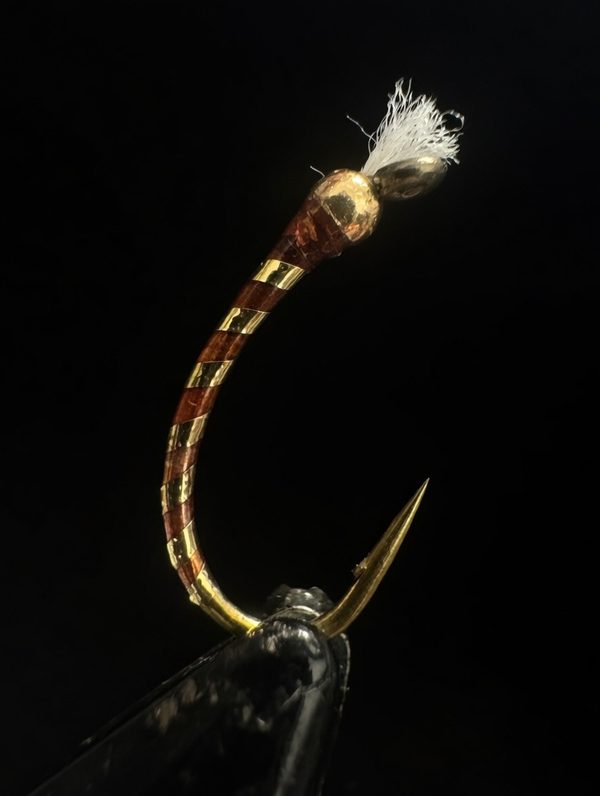
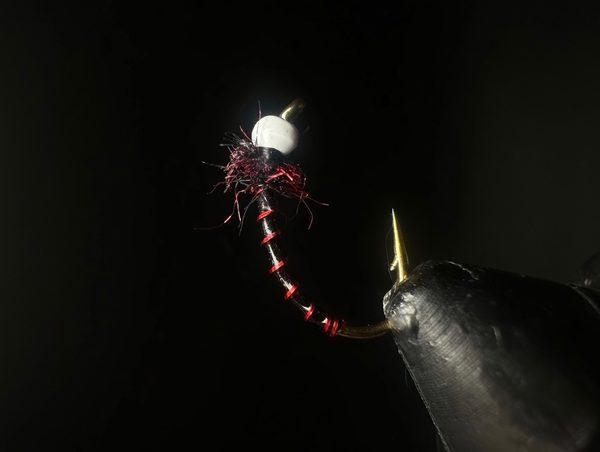
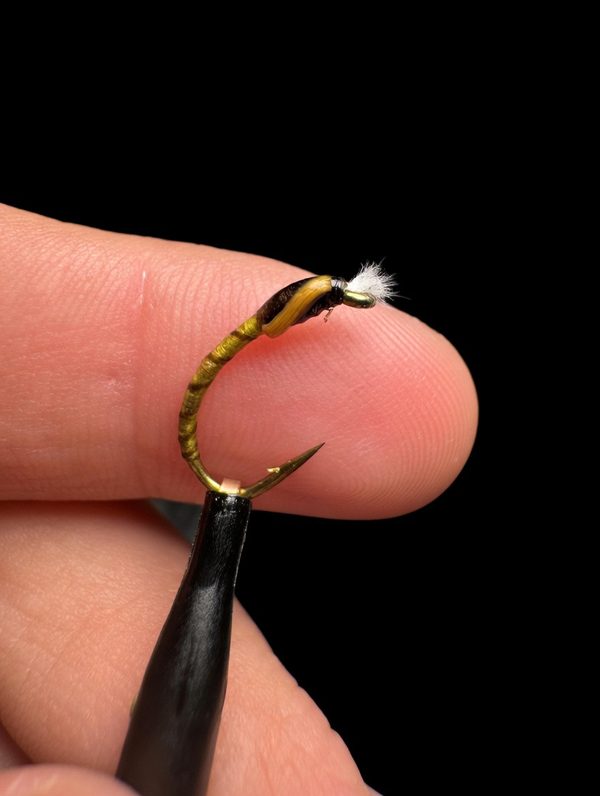
- Chocolate Gold — A tungsten-bead red/brown with gold ribbing. The go-to pattern from ice-off through June in 10–16ft of water. Trout at 11 Mile eat this pattern with confidence.
- Snow Cone (Frank's Red Hot Ronnie) — Black thread, red wire rib, white glass bead. Exceptional visibility in stained water conditions, which 11 Mile can develop during runoff. A top-five pattern all season.
- Muskie Buzzer — Olive/brown with a realistic wing case. Works best during active hatches in the 8–12ft zone. Deadly in the coves along the east bank.
- Black/Red Micro — Drop to a smaller, darker pattern (#16–18) when fish are being finicky on calm, bluebird days. 11 Mile fish will lock onto size.
- Chirono'midge' — When nothing else is triggering strikes, this slim, realistic midge pattern in natural colors often breaks the code at 11 Mile.
All of the above patterns are available in our hand-tied 5-packs, tied on 2x heavy wire hooks that won't fold under the pressure of a 24-inch brown running for deep water.
Depth and Presentation at 11 Mile
Depth is everything in stillwater fly fishing — and 11 Mile's varied topography means you need to be systematic about it. Here's the approach that consistently produces fish at 11 Mile:
- Start with your fly 1–2 feet off the bottom and work up the water column every 15–20 minutes until you find actively feeding fish
- In early spring (March–May) and fall (September–October), fish tend to hold in 10–16ft; in midsummer, push deeper to 18–22ft or target the shaded morning periods in shallower coves
- Let the wind do the work — a slow, natural drift across a flat is more effective than actively retrieving; make small, slow hand-twists if the wind dies
- Watch your indicator obsessively — 11 Mile trout take chironomids gently; a subtle sideways twitch or a slowing of the drift is your signal to set
When to Fish 11 Mile Reservoir
11 Mile is open year-round and fishes well in every season, but there are windows that stack the odds heavily in your favor:
- March–May (Ice-Off through Spring) — The absolute best window. Fish move shallow and feed aggressively after winter. Chironomid hatches peak in Witcher Cove and the east-bank bays. Expect consistent action in 8–14ft of water.
- June–August (Summer) — Fishing slows on bluebird days but can still be productive early morning and late evening. Target deeper water (18–25ft) mid-day. Kokanee salmon fishing with jigging spoons becomes a strong option in midsummer.
- September–October (Fall Feed-Up) — Trophy brown trout season. Browns at 11 Mile push into the shallows ahead of their spawn and can be targeted with large streamers and chironomid dries during evening hatches. One of the most underrated windows on the reservoir.
- November–February (Winter) — Ice fishing is popular and productive at 11 Mile. For open-water anglers, the tailout near the dam can produce in warmer spells.
Regulations You Need to Know
11 Mile Reservoir is located within 11 Mile State Park — a day use fee or annual parks pass is required. The reservoir is open to all fishing methods (no fly-fishing only restriction), which means some sections can get busy with bait and spin anglers during summer weekends. The coves and flats are typically the most productive areas for fly anglers, and weekday mornings in shoulder season give you the best chance at solitude. Check the current Colorado Parks and Wildlife regulations for any size limits or slot restrictions, which do change periodically on this water.
Eleven Mile vs Spinney — Which to Pick
If you've got one day to fish South Park and you're choosing between Spinney and Eleven Mile, here's the honest read.
Pick Spinney if:
- You're targeting trophy trout aggressively. Spinney is smaller, more focused, runs under strict trophy regs (flies and lures only, limited harvest), and the average fish runs larger than Eleven Mile.
- You're a dedicated indicator chironomid specialist. Spinney's western flats are the single most consistent chironomid bank in South Park.
- You prefer wading or fishing from shore. Spinney's western shoreline is walkable; you don't need a boat.
- You want the regulation-filtered crowd. Trophy regs and gear restrictions keep the casual weekend traffic down.
Pick Eleven Mile if:
- You want variety in one day. Eleven Mile is roughly three times Spinney's surface area and holds chironomid flats, deep brown-trout zones, and kokanee water all at once.
- You're fishing from a float tube, pontoon, or boat. Eleven Mile rewards mobility — the dam, Witcher Cove, the inlet, and the east-bank coves all fish differently.
- You're chasing a trophy brown specifically. Eleven Mile's fall brown trout fishing is among the best in Colorado and Spinney rarely matches it.
- You want camping built in. Eleven Mile State Park has full camping infrastructure; Spinney does not.
- You're bringing non-fly anglers along. Eleven Mile is open to all methods.
Honest answer: If Antero used to be your home water and you want the closest emotional substitute, fish Spinney. If you want bigger water, more variety, and a real shot at a trophy brown in the fall — fish Eleven Mile. Most serious South Park anglers rotate between the two. With Antero drained for 2026, splitting your South Park days between Spinney and Eleven Mile is the smartest way to avoid the post-Antero crowds and stay on fish all season.
Fish 11 Mile With a Guide
Trout Tricks guides 11 Mile Reservoir throughout the season. Whether you want to dial in your chironomid setup, target a trophy brown in the fall, or simply spend a day on one of Colorado's most beautiful high-altitude reservoirs with someone who knows every flat and drop-off, we can make it happen. Guided days at 11 Mile include all flies, indicator setup coaching, depth-finding strategy, and local knowledge that takes years to accumulate on your own.
If Antero was your home water: Antero is being drained for 2026 — full breakdown here. Eleven Mile is the bigger-water, more-varied pivot. Spinney is the closer emotional substitute, and the Delaney/Lake John complex in North Park is the smart long-drive play for anglers wanting fewer crowds.
Recommended reading: our South Park fly fishing guide, the best chironomid fly patterns, the Spinney Mountain Reservoir breakdown, and the Delaney/Lake John North Park guide.
Get the Patterns Used in This Article
Every fly mentioned in this guide is hand-tied fresh to order by Thomas Frank. Proven on Colorado's best stillwaters — tied on 2x heavy wire hooks with tungsten beads.
Comments